
News
Content
The best combination padlock is the one whose material matches its environment. Choose brass for outdoor sheds and cabinets, aluminum for luggage and school lockers, zinc alloy disc for tool boxes and gates, and stainless steel disc for wet or coastal sites. For anything beyond luggage, pick a 4-wheel code, which gives 10,000 combinations.
If you are buying in volume, work with a China combination padlock manufacturer that controls its own raw materials and can laser-mark your logo. The sections below show how to make each of those decisions.
A padlock combination lock replaces the key with a digital wheel code. There is no key to lose or copy, and one code can be shared with a whole team. That convenience is why these locks dominate gyms, schools, luggage and storage cabinets. The table below links common jobs to the lock type that fits them best.
| Where You Use It | Main Risk | Best Choice |
| Suitcase, backpack, gym bag | Weight and casual tampering | Aluminum, 3 or 4 wheels |
| School or gym locker | Shared use, many locks to manage | Aluminum in color-coded groups |
| Garden shed, outdoor cabinet | Rain, humidity, rust | Brass, 4 wheels |
| Tool box, fence, gate | Bolt cutters and pry bars | Zinc alloy disc |
| Pool area, boat yard, seaside | Salt air and constant moisture | Stainless steel disc |
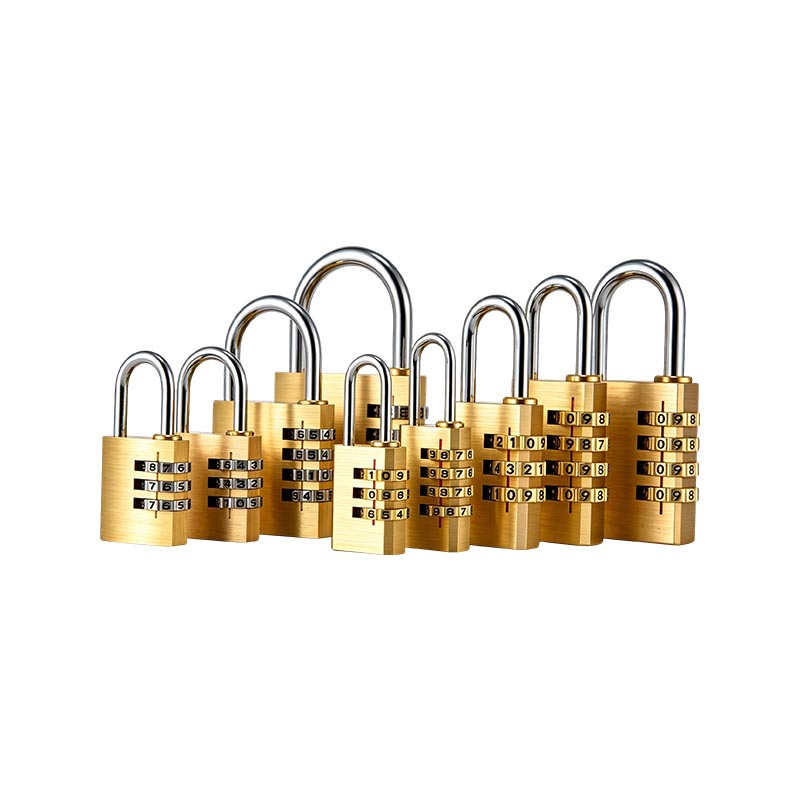
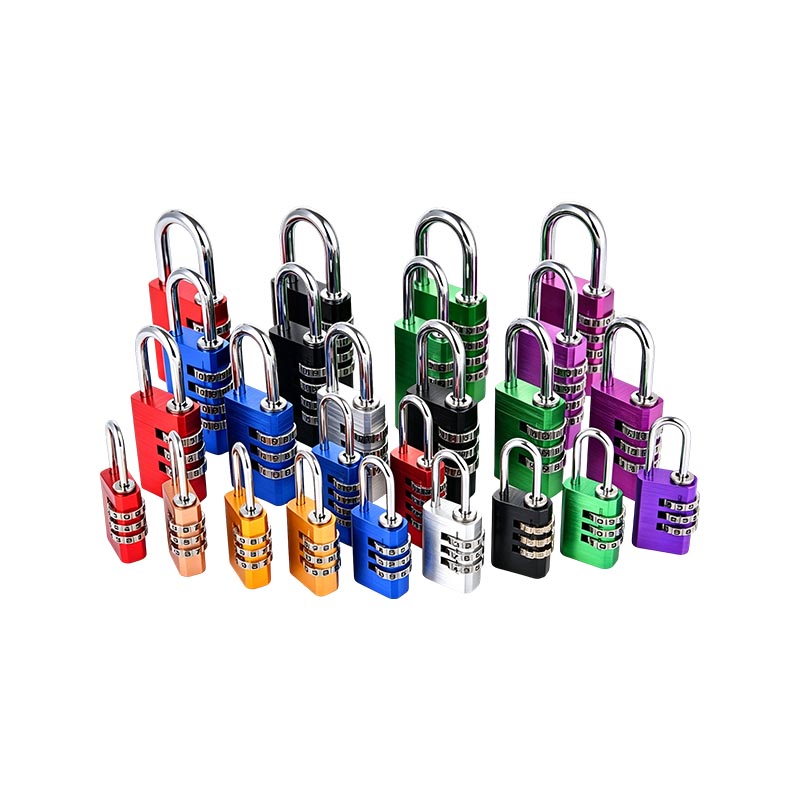
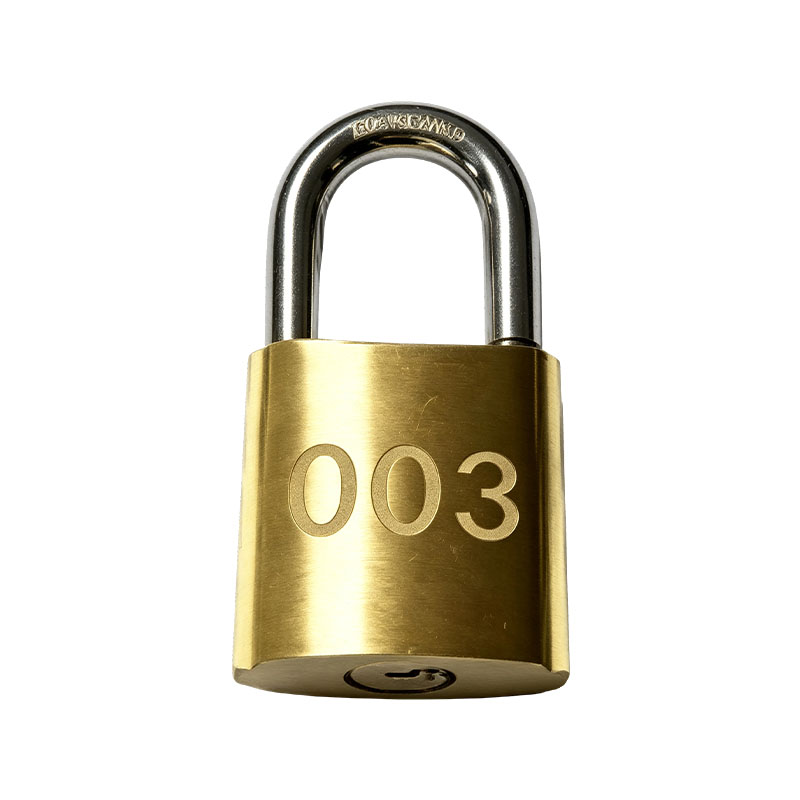
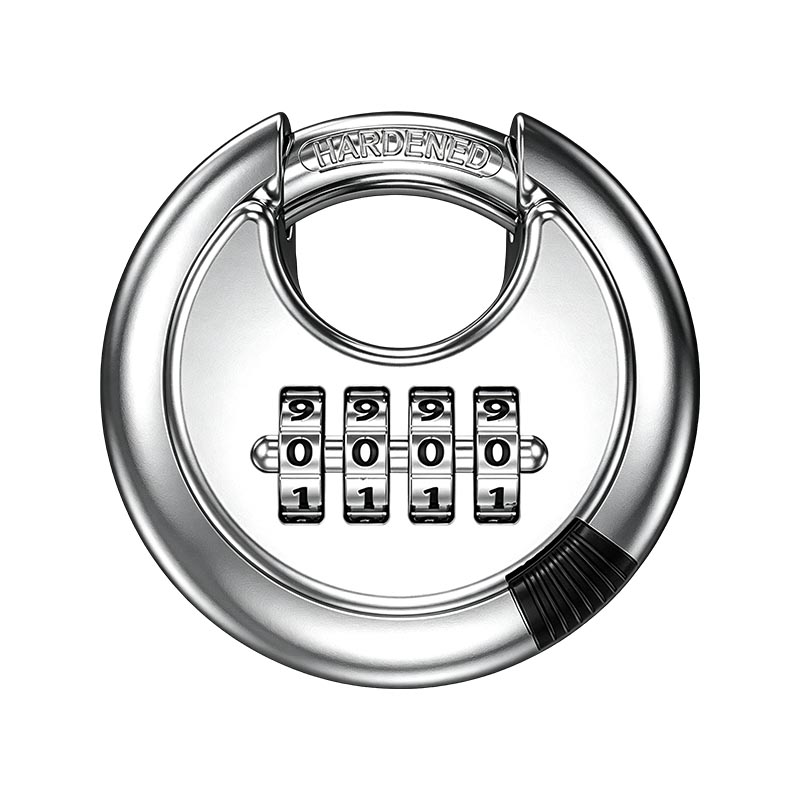
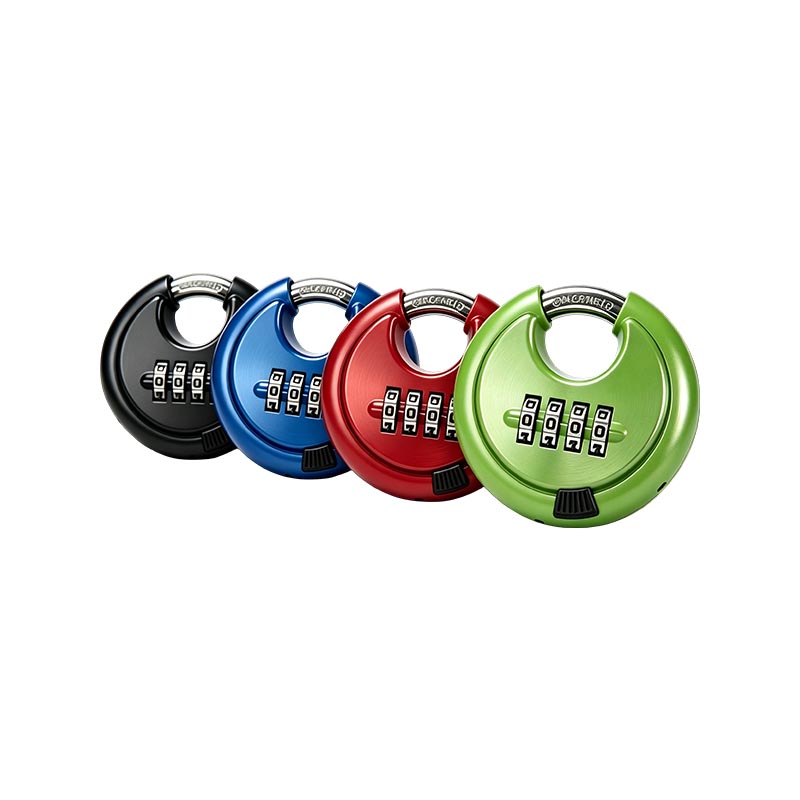
Four core models from one source factory, covering brass, aluminum, zinc alloy and stainless steel. Every model can be customized for bulk orders.
Each number wheel has a notch cut into its edge. When every wheel shows the correct digit, the notches line up and the locking bar can drop into the channel, releasing the shackle. Every extra wheel multiplies the possible codes by ten.
A 4-wheel lock takes about 5,000 guesses on average to crack by brute force. At one guess per second, that is nearly 1.5 hours of nonstop trying. This is enough for everyday protection, but it is why weak codes like 0000 or 1234 should never be used.
Material decides how long a lock lasts and how it behaves under attack. The four models above each solve a different problem.
Pure brass resists rust and corrosion, so it keeps working through rain, humidity and temperature swings. The dense body feels solid and stands up to impact. Hardenable shackles add resistance to sawing and prying.
Best for: sheds, cabinets, outdoor storageThe integrated aluminum alloy body is light but strong, and anodizing gives a scratch-resistant surface in many colors. An aluminum body weighs about one third as much as brass of the same size.
Best for: luggage, gym bags, school lockersThe round disc body wraps around the shackle, leaving very little exposed for bolt cutters or pry bars. High-pressure die-cast zinc gives a dense, smoothly polished body at a lower cost than steel.
Best for: tool boxes, fences, gatesStainless steel offers the best rust resistance of the four. Combined with the shielded disc design, it suits harsh outdoor conditions where any other metal would eventually corrode.
Best for: wet, humid and coastal sitesBulk buyers make better decisions when they work through the order in a fixed sequence. Follow these five steps before you request a quotation.
Decide whether the lock will be indoors, outdoors, wet or dry. This alone narrows the choice to one or two materials.
A shackle that is too short will not close. One that is too long gives a thief more room to leverage.
Use 3 wheels for low-risk goods and 4 or more for lockers and storage.
Decide whether you need color coding, a laser-marked logo or embossing. Retail packs look better with a clean logo and a clear color.
Test the wheel feel, shackle action and finish on samples before you commit to the full quantity.
A custom combination padlock manufacturer should give you real control over the finished product. Ask which of these options are available and what they add to lead time.
| Buyer Type | What They Usually Need | Suggested Focus |
| Retail distributor | Shelf appeal and brand recognition | Logo, color and private packaging |
| School or gym operator | Easy management of hundreds of locks | Color coding and 4-wheel codes |
| Engineering contractor | Durability in harsh sites | Stainless steel or brass |
| Export trader | Stable quality and on-time delivery | Certified source factory |
Choosing an OEM/ODM combination padlock factory is a bigger decision than choosing a lock. A reliable supplier shows its strength in the things you can verify.
Pick the material that fits your environment, use at least 4 wheels for valuables, and work with a factory that can customize logo, color and packaging. Send us your requirements and we will recommend the right model.
Request a QuoteNext Article:
Hot Recommended Products
Through continuous innovation, we build a high‑end R&D team, form a diversified cluster of lock and hardware products, and accelerate the high‑quality industrial development of safety hardware locks.

With thirty years of experience manufacturing EN 12320 certified padlocks, we maintain strict control over raw materials and quality.
Contact Information
+86-579-85665313
+86-579-85665685
market@chinajiuzhou.com
Tony Xu
E-mail:sales2@chinajiuzhou.com
Add
No. 11 Wuhan Road, Shangxi Town, Yiwu City, Zhejiang Province, China 322006
Quick Links
[Mobile]
Keep In Touch

 English
 Français
 Español
 Deutsch
 عربى
عربى
 italiano