
News
Content
It is 11:40 p.m., your guest is standing on the porch, and the key is inside a small metal box that will not open. Nobody is driving over to help, and the first line of the review is already being written. Every host who runs self check-in has either lived that night or spent money to avoid it.
The practical answer: for most single-property and small-portfolio hosts, a mechanical, wall-mounted combination key lock box is still the most reliable way to hand over a key — as long as the body is metal, the shackle is hardened, and it is mounted where a tired guest will actually see it. Smart, app-connected boxes earn their price when you run several listings, change codes remotely, or work with a co-host who is never on site.
What follows is the reasoning behind that, plus the fit checks, tolerances and daily routines that separate a box lasting three seasons from one that seizes up in February.
There are three jobs, and they pull in different directions.
Replace the meet-and-greet. The box exists so check-in does not depend on your schedule. That means a guest must be able to open it in the dark, one-handed, on the first attempt.
Survive turnover. A box on a two-night-turnover listing is opened by the guest, the cleaner and you — roughly 80 to 150 cycles a year. Residential lock boxes are touched a handful of times annually; rental boxes are worked every few days, often in rain, by someone who has never used one. This is where cheap bodies with plastic wheels fail: the wheels wear smooth, the numbers drift half a position, and a code that worked last week suddenly does not.
Be the fallback when everything digital fails. A dead phone, a logged-out app, a guest who never installed anything — the mechanical box still opens. That is why many hosts keep both routes: a keypad for daily entry, a combination box as backup. And remember the box is a delay, not a vault. Ten seconds of resistance stops an opportunist at 2 a.m.; it will not stop an angle grinder. Keep valuables inside the property.
All three hand over access, but they fail in completely different ways. Judge them against your turnover rate and whether you are allowed to change the door hardware at all.
| Decision point | Mechanical combination box | Smart / app-connected box | Keypad deadbolt |
|---|---|---|---|
| Power source | None | Battery plus app pairing | Battery or hardwired |
| Changing the code | Open with the current code, reset wheels on site | Remote, from an app | Remote, from an app |
| Typical failure | Worn dials, forgotten code, frozen mechanism | Dead battery, lost pairing, login problems | Dead battery, door prep not compatible |
| Guest friction | Low; a short video is enough | Medium; guest must install or accept an invite | Low once installed |
| Door modification | None | None | Yes, and permission needed |
| Best fit | One or two listings, backup entry, shared hallways | Three or more listings, remote co-hosts | Properties where you may replace the lock |
The pattern is simple. Mechanical boxes win on reliability and cost, and lose on remote code changes. Smart boxes win on operations and lose on batteries. Keypad deadbolts give the cleanest guest experience but need permission and the right door.
If you cannot change the lock and you are not on site, keep the mechanical box in the plan — usually as the second line of access rather than the only one.
Most lock box complaints are fit complaints. Before ordering, measure three things: the width of the mounting surface, the clearance to the door swing or gate frame, and how many keys the guest actually needs to carry.
The curved back sits flush against a round handrail, porch post or thick gate bar, so the shackle is not fighting the shape of the mount. On a flat wall it touches along one line only, which lets the box rock when a guest pulls on it. Use it on round surfaces, or add a backing plate.
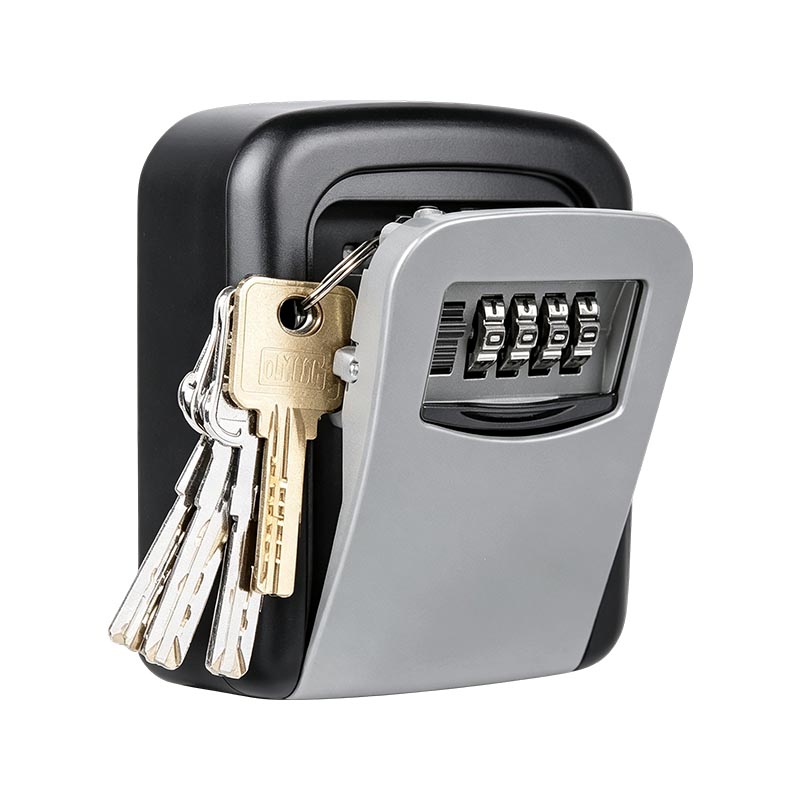 Arc-Shaped Aluminum Alloy Key Lock Box with Combination LockWall-mounted or hanging aluminum key lock box with rounded arc body and zinc alloy combination wheels, suited to round posts or rails.View Product →
On steel security doors, screen-door frames and narrow apartment stiles, a full-width box collides with the door swing or hangs half over the frame. A slim-waist body fits inside the clearance and still holds one or two keys plus a small fob. Measure the gap first: the difference between a 25 mm and a 40 mm body decides whether the door closes cleanly or scratches every time.
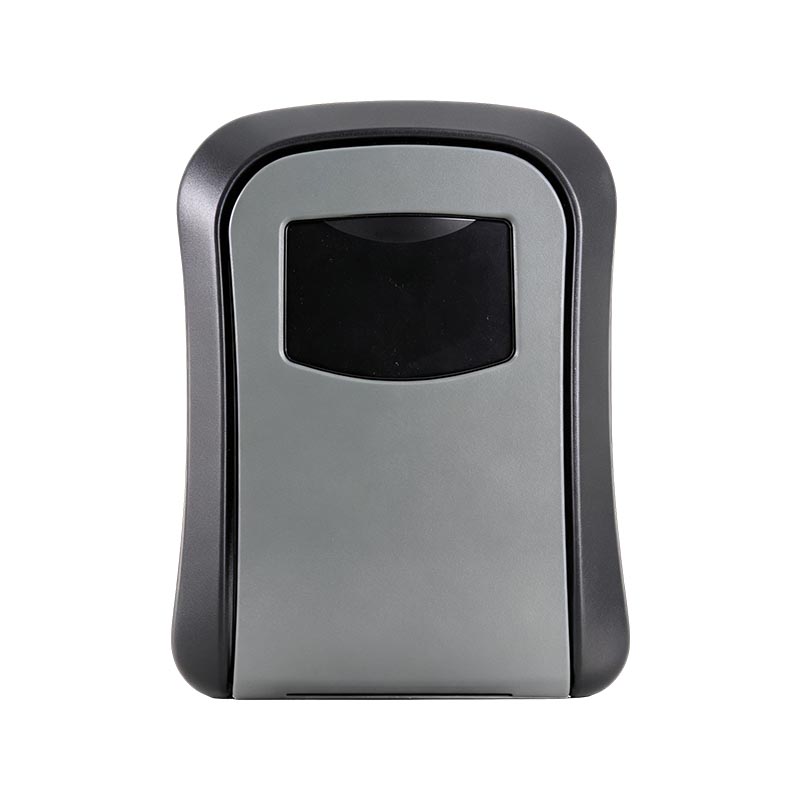 Slim Waist Aluminum Key Lock Box for Narrow ClearancesCompact aluminum key lock box with slim waist middle design and waterproof seal for tight door gaps and shared outdoor key storage.View Product →
Where a cleaner, a co-host and a guest all need a key, the limiting factor is internal volume, not the code. A square body holds three to five keys, or a key plus a car fob, and its flat back takes a wall plug or four screws without a plate. It is also the easiest shape to hang on a hasp if you later add a second layer of security.
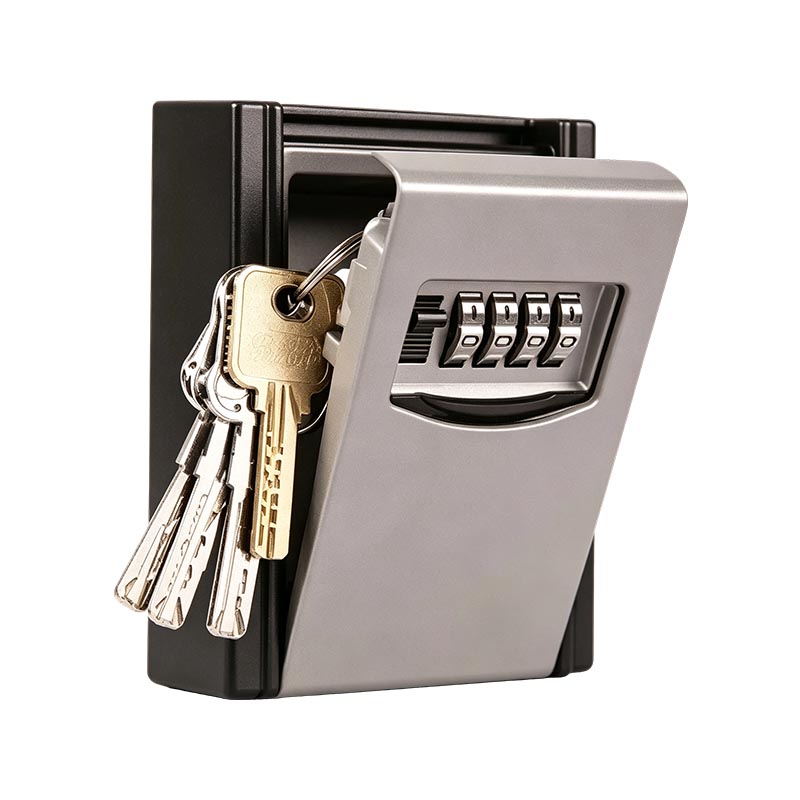 Square Aluminum Key Lock Box with 4-Digit Combination LockAll-aluminum square lock box with zinc alloy combination wheels and sealed waterproof strip, holding multiple keys for wall or hanging access.View Product →
The hardware is half the system; the routine is the other half. Hosts who never get the 11:40 p.m. call tend to follow the same short list.
Two smaller habits matter as well: mount the box where a guest sees it immediately, because a dark side path is a support call, and keep a second, separately coded box for the cleaner so staff access never leaks into guest messages.
Hosts scaling to several properties, and the distributors who supply them, end up judging a box on manufacturing detail rather than on catalogue photos. The checks that predict field life are unglamorous:
A production partner is measured on the same points, plus consistency. Our plant in Yiwu runs an in-house lock testing laboratory covering salt spray, tensile and torque testing with full performance checks, alongside ISO, TUV, SGS and BSCI certification. The facility covers 18,000 m² with around 100 staff and more than 30 years of accumulated lock-making experience, and products ship to over 20 countries. For a line-by-line look at how that control is applied, see our guide to the precision padlock manufacturing process. Custom designs, colours and packaging run through the same channel as standard orders.
Given time and tools, any small box can be defeated. What you are buying is delay and deterrence: a hardened shackle, a shrouded shackle design and a solid mounting point push the effort above what an opportunist will spend.
A slim-waist box usually takes one or two keys; a square body takes three to five, or a key plus a small fob. Check internal dimensions rather than outside size, because the dial mechanism consumes a surprising share of the volume.
Mechanical dials can freeze shut. A cover, a sheltered mounting position and a graphite application before winter solve most of it; for the coldest weeks, keep an indoor backup route as well.
Rarely. Most hosts run a keypad or smart lock for daily entry and keep the mechanical box as the fallback when a battery dies, an app fails or a phone is lost. Redundancy, not replacement, is the point.
Pick the shape that matches the door you actually have, mount it where a tired guest will see it, and treat the code like a password. If you are sourcing lock boxes in volume, or you need a version sized around your own key inventory, send us the key count and the property type and we will match the body, shackle and finish to the job.
Next Article:
Hot Recommended Products
Through continuous innovation, we build a high‑end R&D team, form a diversified cluster of lock and hardware products, and accelerate the high‑quality industrial development of safety hardware locks.
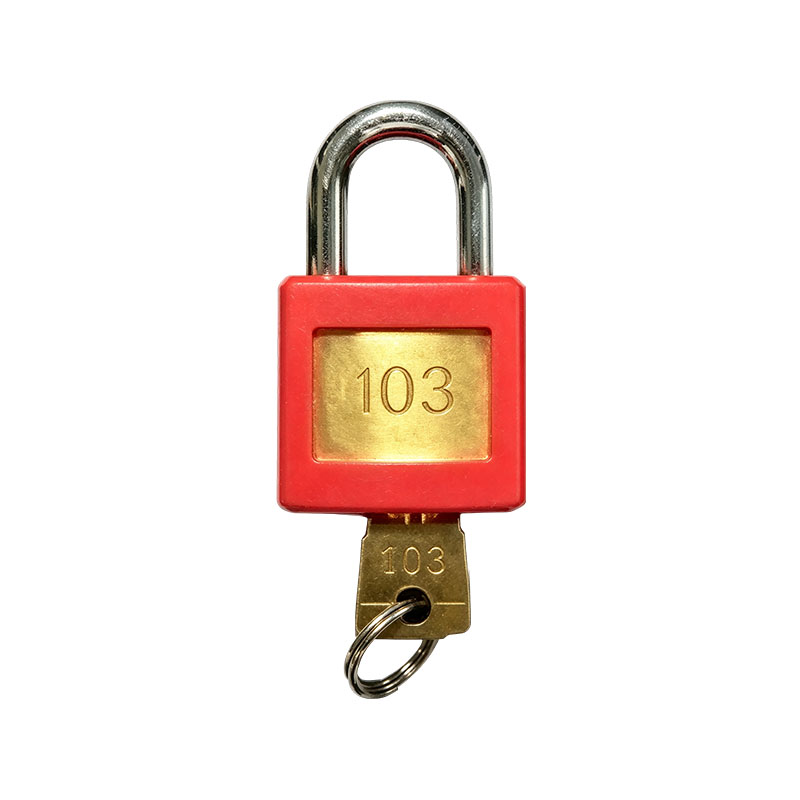

With thirty years of experience manufacturing EN 12320 certified padlocks, we maintain strict control over raw materials and quality.
Contact Information
+86-579-85665313
+86-579-85665685
market@chinajiuzhou.com
Tony Xu
E-mail:sales2@chinajiuzhou.com
Add
No. 11 Wuhan Road, Shangxi Town, Yiwu City, Zhejiang Province, China 322006
Quick Links
[Mobile]
Keep In Touch

 English
 Français
 Español
 Deutsch
 عربى
عربى
 italiano