
News
Content
It is 7:40 on a Monday morning. A cleaner, an electrician and a letting agent all need the key to the same building, and none of them should walk away with a permanent copy. A wall mounted key lock box turns that problem into one fixed point on the wall, one shared code or key, and an access routine anyone can follow.
The short answer on choosing one: decide who needs access, decide whether the box lives indoors or outdoors, match the body material and sealing to that location, and only then compare shapes and internal capacity. Buyers who start with the shape usually replace the box within a year.
These notes come from a lock hardware factory in Zhejiang that has made padlocks and locking hardware for more than 30 years and exports to 20+ countries, so they reflect production, testing and shipping experience rather than a showroom visit.
A lock box is an access-control decision wearing a hardware shell. Two questions settle most of the specification before you look at any product photo.
If the users change — contractors, cleaners, short-stay guests — choose a resettable combination lock, because handing out a physical key means chasing it back later. If access is limited to a small maintenance team and the owner must control copies, a keyed cylinder is easier to audit. Mixed sites often use both: a combination unit at the service entrance and a keyed unit in the plant room.
Sheltered corridors tolerate almost any finish. An exposed fence post, a coastal apartment block or a construction hoarding does not. Rain, salt air and direct sun attack three things at once: the coating, the dial wheels and the screws. Outdoor positions also invite tampering, so the door edge, the hinge pin and the body thickness matter more than the number of dials printed on the front.
Write those answers down before requesting samples. A supplier who knows the position and the user group can recommend a material and an IP rating in one reply instead of sending a full catalogue.
Six items separate a box that survives five winters from one that jams in the second. This is the list we work through with overseas buyers before quoting.
| Specification | Why it matters | Practical target |
|---|---|---|
| Body material | Drives corrosion resistance, weight and cost | Die-cast zinc alloy or aluminium for sheltered walls; 304 stainless for coastal or fully exposed positions |
| Locking mechanism | Decides who can reset access and how fast | Resettable three- or four-dial combination for shared access; keyed cylinder where copies must be controlled |
| Internal capacity | Too small and users leave keys outside the box | Count hooks and internal depth against your longest key tag, allowing 15–20 mm of clearance |
| Sealing and finish | Water ingress rusts keys and seizes dial wheels | IP65-rated door for outdoor walls; salt spray test data for coastal tenders |
| Fixing hardware | Most failures are pull-out failures, not lock failures | M6 expansion bolts for brick and concrete; through-bolts with washers for metal gates |
| Door and hinge design | Thin doors flex and open with a screwdriver | Recessed door edge, internal hinge pin, load-bearing wall thickness above 2 mm |
If a quotation arrives without a material grade, a fixing specification and a test report, treat it as incomplete. Those three details are exactly where budget units fail.
Body material is the first cost driver and the first failure point. Three options cover most projects.
Zinc casts into tight shapes with clean threads and accepts powder coating well, which keeps unit costs reasonable for rental portfolios and indoor corridors. On an unprotected wall it needs sufficient coating thickness; a thin coat chalks and fades within one strong summer.
Aluminium keeps weight down and resists corrosion better than untreated zinc, while an ABS cover protects the dial area from rain and grit. This combination suits gates, meter cabinets and outdoor walls that are exposed but not directly coastal.
For harbour-side buildings, water treatment sites and anywhere salt spray is routine, 304 stainless is the honest answer. It costs more, so specify it where the environment justifies it instead of across an entire order.
Two production details matter as much as the base material. Coating consistency comes first: mixing two batches in one shipment produces colour differences that show on the same wall. Testing comes second. Our lab runs salt spray, tensile, torque and full performance checks, and the factory holds ISO, TUV, SGS and BSCI certification — documentation buyers usually need before a tender closes.
Shape follows the wall and the key bundle, not decoration. Our key lock box range covers three bodies that solve three installation problems.
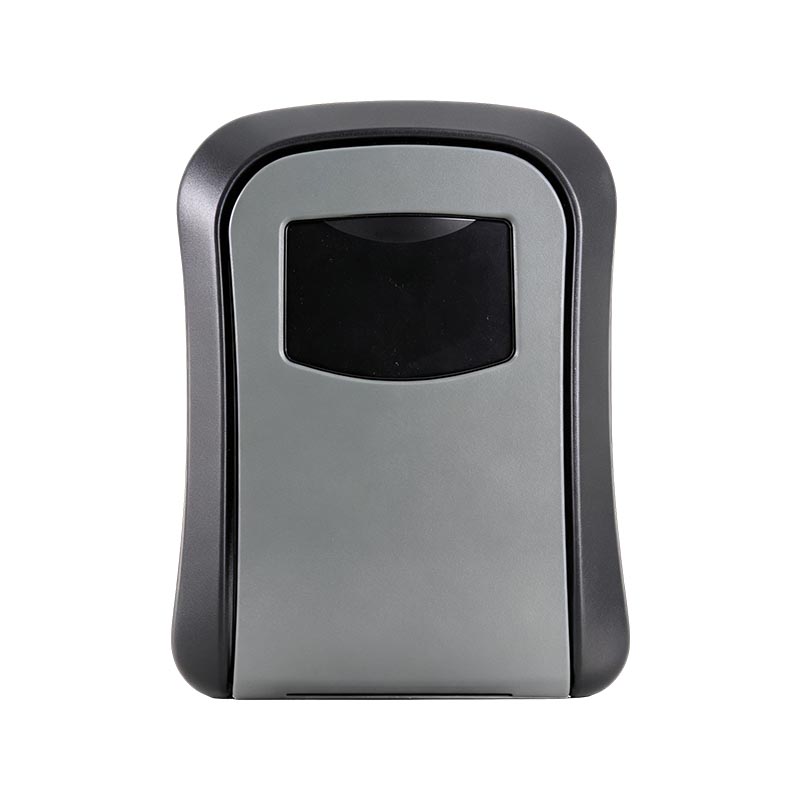
The curved back sits flush on rough brick, stone and rendered walls, so the box does not rock when it is tightened down. It is the usual pick for older building exteriors and garden walls with an uneven surface.
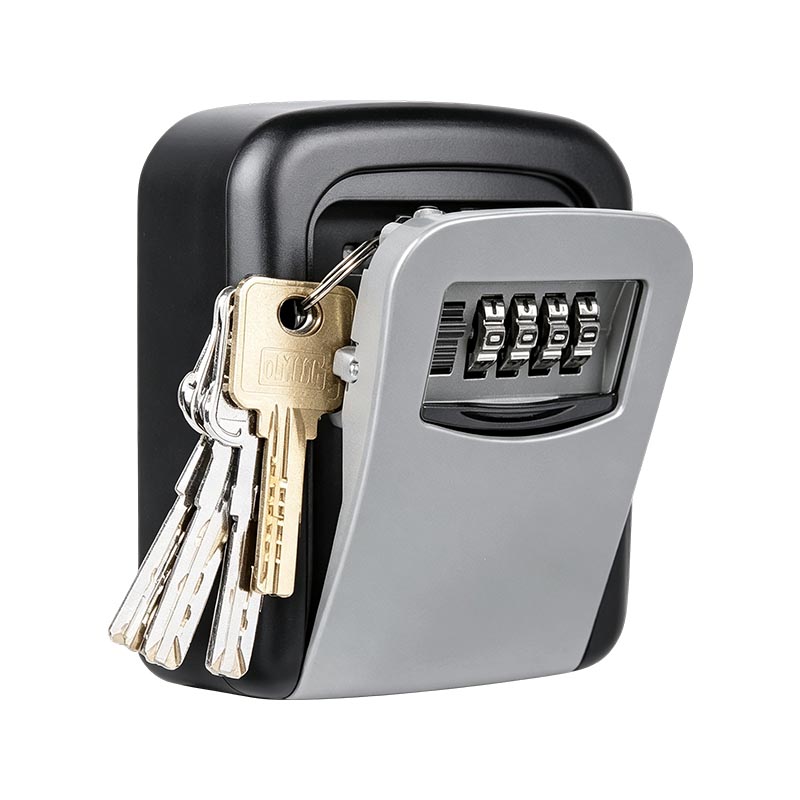 Arc-Shaped Aluminum Alloy Key Lock BoxCurved back sits flush on rough brick or stone, while the single-piece aluminum housing resists prying for exterior key storage.View Product →
A narrower profile fits slim posts, gate frames and pipe housings where a wide box would overhang and create a lever point. Practical on metal gates and utility cabinets.
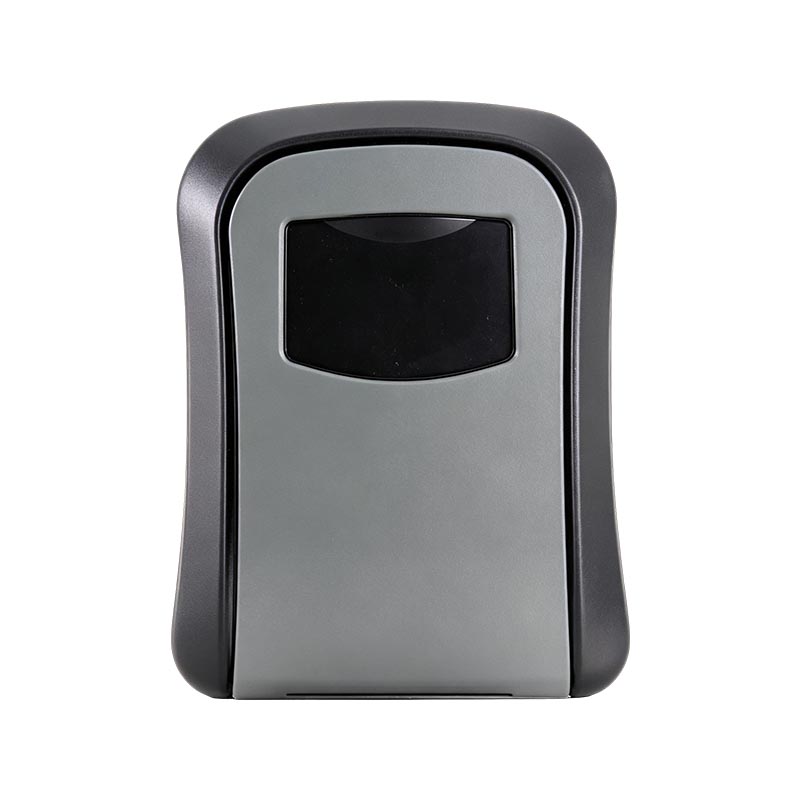 Slim Waist Waterproof Key Lock BoxNarrow profile suits slim posts, gate frames and pipe housings; waterproof aluminum housing and zinc alloy combination wheels support outdoor key storage.View Product →
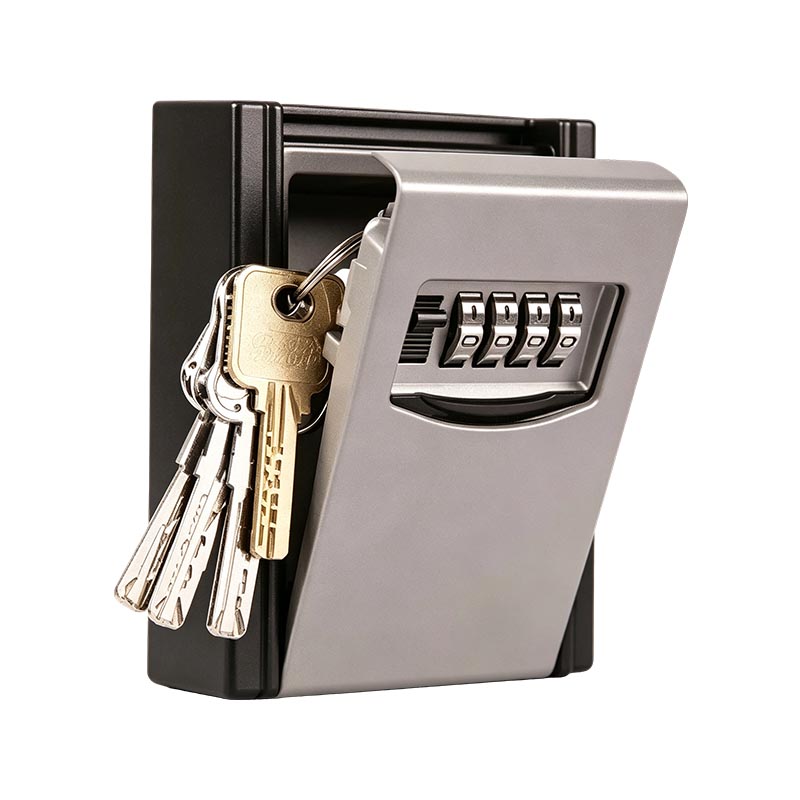
Maximum internal volume for the footprint. Choose this shape when the box must hold several keys, fobs and a small access card, such as a building with multiple communal doors.
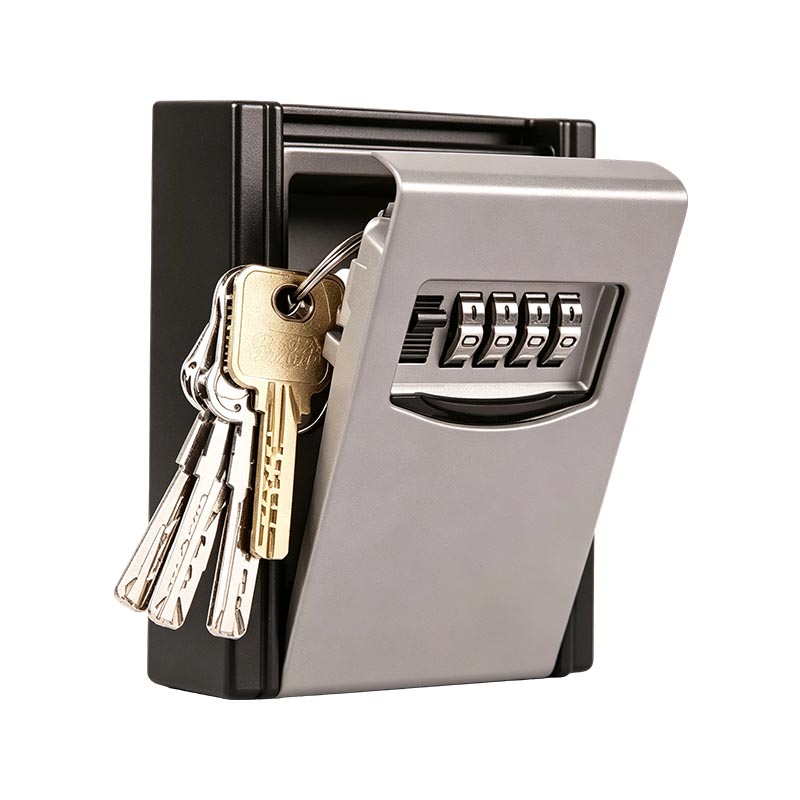 Square Aluminum Alloy Combination Key Lock BoxSquare die-cast aluminum body with waterproof seal suits wall mounting; useful where several keys and fobs need shared combination storage.View Product →
All three can be produced with custom colours, logo marking and retail or bulk packaging. Check hook spacing and internal depth before committing to a large order, because a 20 mm difference in depth decides whether staff can close the door with a key tag attached.
Most complaints about key lock boxes are installation complaints. Work through this sequence.
Do not mount the box on a gate leaf that flexes every time it opens. The body twists, the door stops seating and water finds the gap. Fix it to the rigid post or the adjacent wall instead.
Yes, if it is specified for it: an IP65-rated door, a corrosion-resistant body and stainless fixings. Sheltered positions can use a lower-cost finish, while exposed coastal walls should use 304 stainless.
It depends on hook count and internal depth rather than outer size. Measure your longest key tag and allow 15 to 20 mm of clearance so the door closes without pressure.
On resettable dial models, yes — normally with the door open using a reset lever or screw. Confirm the procedure in writing before ordering, because non-resettable units exist and they cause real problems in rented property.
Material grade, fixing kit, coating colour reference, packaging artwork and a test report. Add spare door and dial sets for maintenance if the site is remote.
Pick the box by access pattern, wall position and material, then compare shapes and internal volume. That order keeps you out of early replacements.
Our factory supports custom designs, colours and packaging for bulk and OEM orders, with shipping to Europe, South America, Asia, South Africa and beyond. Send your wall type, user group and quantity through the contact page and we will reply with a specification and a realistic lead time.
Previous Article:
Next Article:
Hot Recommended Products
Through continuous innovation, we build a high‑end R&D team, form a diversified cluster of lock and hardware products, and accelerate the high‑quality industrial development of safety hardware locks.
News Center
News & Information
Real time dynamics, one hand control. Here, we gather enterprise information, industry hotspots, and activity dynamics to help you quickly understand our development pace and cutting-edge insights.

With thirty years of experience manufacturing EN 12320 certified padlocks, we maintain strict control over raw materials and quality.
Contact Information
+86-579-85665313
+86-579-85665685
market@chinajiuzhou.com
Tony Xu
E-mail:sales2@chinajiuzhou.com
Add
No. 11 Wuhan Road, Shangxi Town, Yiwu City, Zhejiang Province, China 322006
Quick Links
[Mobile]
Keep In Touch
