
News
Content
Three showings, one key, and forty minutes between appointments: that is when a listing agent finds out whether the lock box on the front door actually works. A dial that stiffens in the cold, a shackle rusted into the hasp, or a code read back wrong all produce the same result — a rescheduled showing and a seller who starts asking whether the listing is in good hands.
Here is the short version. For most real estate agents, a mechanical, resettable combination key lock box with a hardened 8 to 10 mm shackle, a weather-sealed body, and room for three to five keys is the right default. An electronic box earns its extra cost in one case only: a brokerage that needs time-stamped records of who opened which box, and when. Everything else comes down to specifications you can compare on paper.
Four attributes decide whether a box is usable on a live listing, and they are worth checking in this order.
Below that bar you get plastic dials, a 6 mm shackle, or a code that cannot be changed, and the box is replaced inside a year. Run the math per listing rather than per unit: one box that survives three seasons costs less than three cheap ones that do not.
Electronic boxes are popular because they produce an access log. That log is valuable if your brokerage runs a staffed showing service; it is close to worthless if you hand a code to one cooperating agent per appointment. Compare the two on what affects daily use.
| Attribute | Mechanical combination box | Electronic lock box |
|---|---|---|
| Power source | None | Battery, app, or both |
| Code change | Manual, on the box, seconds | Through an app or admin portal |
| Access record | None | Time-stamped log per user |
| Cost per listing | Lower upfront, no fees | Higher upfront, possible subscription |
| Typical failure | Stiff dials, dirt, ice | Dead battery, weak signal, app outage |
| Best fit | Solo agents, small teams, rentals | Brokerages with showing services |
Notice where the risk sits. Mechanical boxes fail slowly and visibly — you feel a gritty dial on a Tuesday and fix it before the weekend. Electronic boxes fail instantly and without warning, which is why the ones worth buying include a physical key override and a low-battery alert.
Weather is the slow killer. Rain enters through the dial gap, sits in the cavity, and works on the shackle plating for months before anything visible happens.
Those points are measurable, not marketing claims. Our Yiwu plant runs key lock box production through an in-house lock testing lab that performs salt-spray, tensile, and torque checks plus full performance inspection, under ISO, TUV, SGS, and BSCI certification.
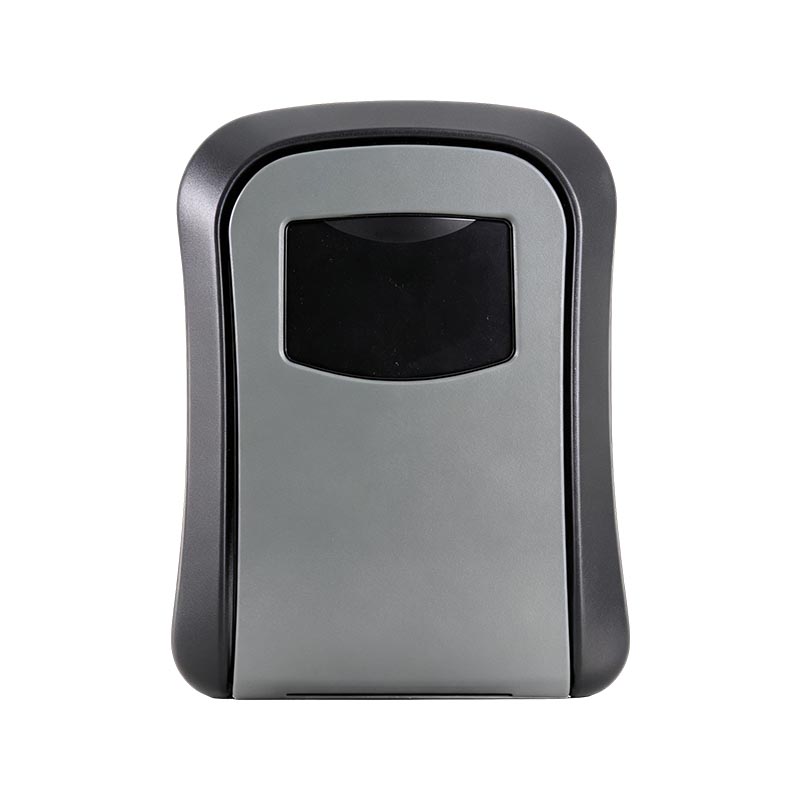
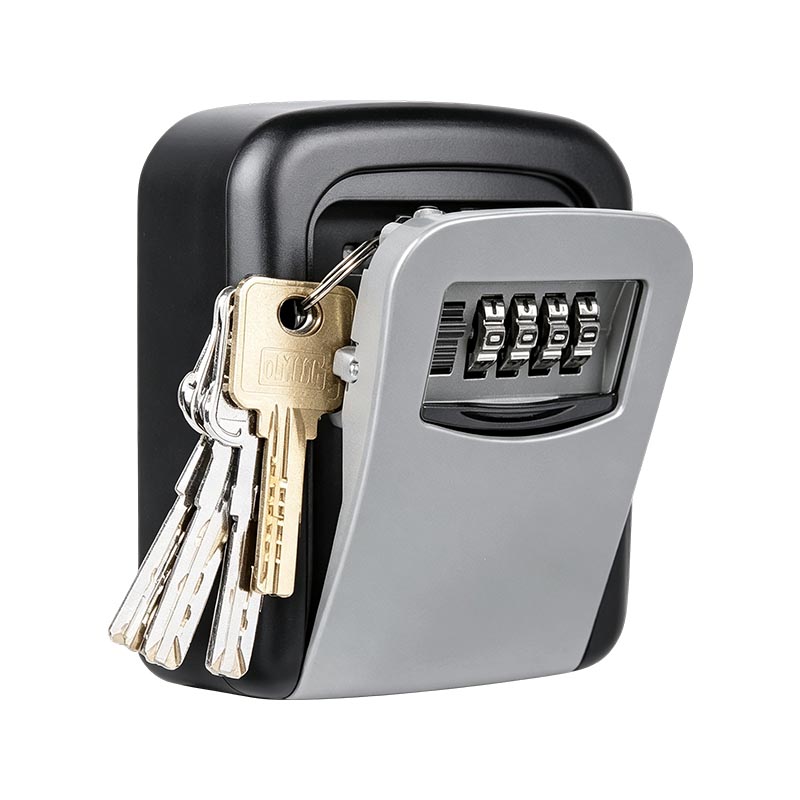 Arc-Shaped Aluminum Alloy Wall-Mounted Key Lock BoxCurved top helps shed standing water from dials and shackle housing, while the aluminum body and zinc alloy wheels suit outdoor shared key storage.View Product →
The arc-shaped model with a curved cover follows that list directly: the curve moves standing water off the dials and shackle housing instead of letting it pool on a flat top.
Mounting comes down to what the seller will allow and how fast a cooperating agent can get in. A hanging box slips over a hasp, handle, or gate rail in seconds and leaves no holes; a wall-mounted box takes longer to install but cannot be walked off with. Narrow jambs and tight recessed entries rule out bulky bodies before anything else does.
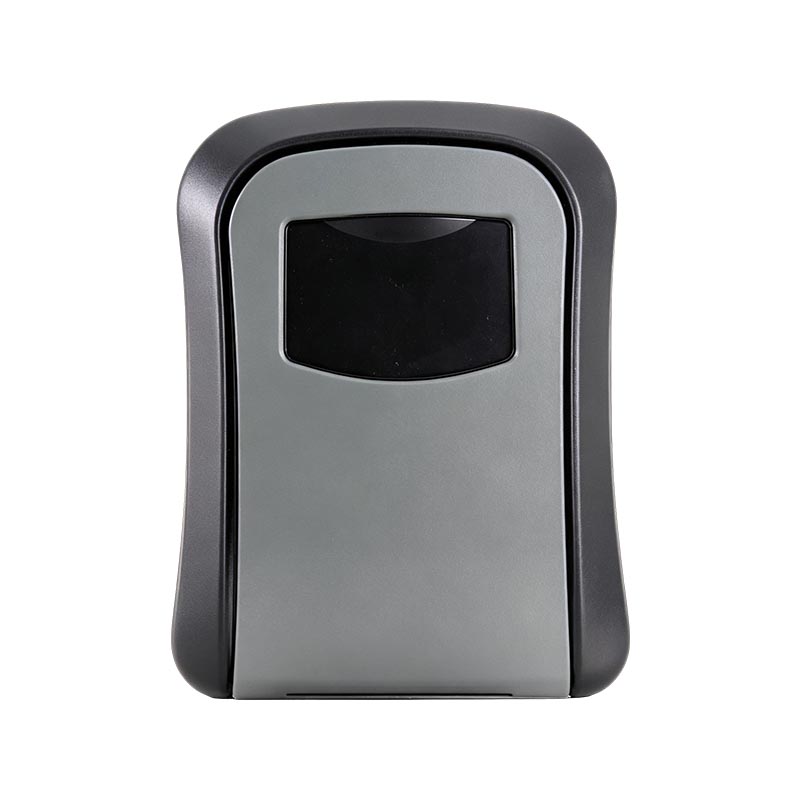 Slim Waist Aluminum Alloy Outdoor Key Lock BoxThe slim waist profile fits narrow jambs, railings, and tight recessed entries, while the waterproof-sealed aluminum housing provides compact outdoor key storage.View Product →
A slim-waist body is built for those tight frames: it hugs a narrow jamb or railing and keeps the dials reachable without extra clearance.
Placement matters as much as the model. Keep the box out of direct sight from the street where local rules allow, but not so well hidden that a buyer's agent spends ten minutes finding it in the dark. Check your MLS or local association guidance on placement and code sharing before ordering — some markets restrict where a box may be hung on a listed property.
Capacity, not security, is usually why agents replace a box. A typical listing carries a door key, a deadbolt key, a mailbox key, a gate key, and occasionally a fob — and a fob with a plastic shell warps in a metal box that has sat in summer sun.
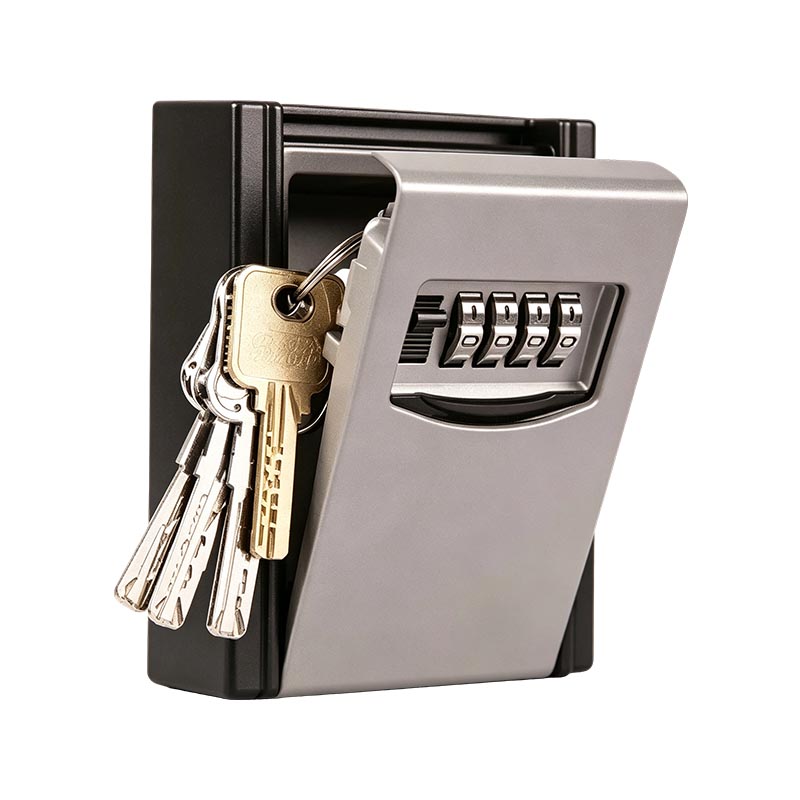
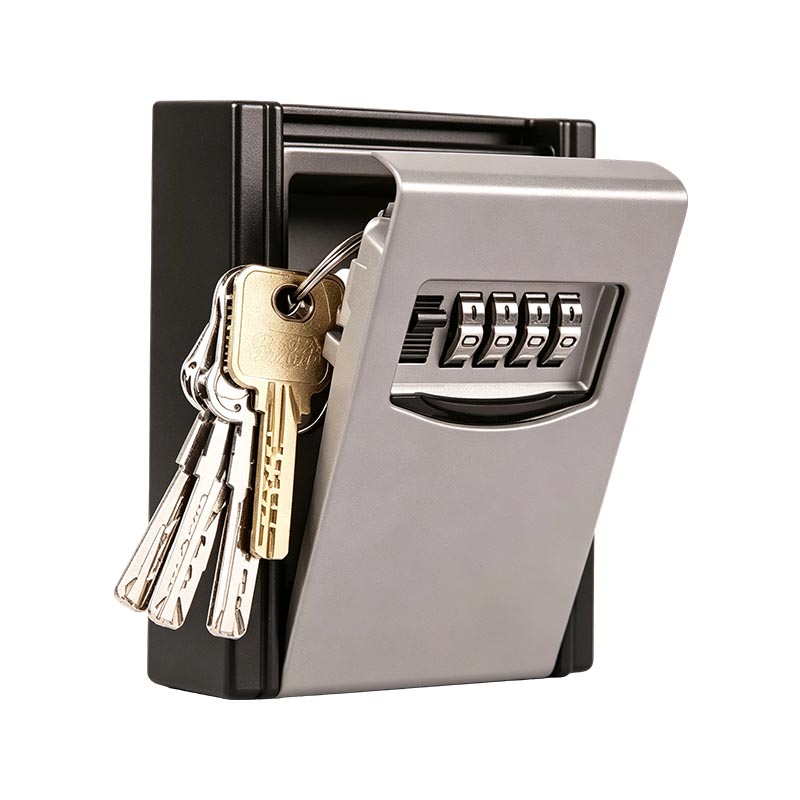 Square Aluminum Alloy Wall-Mounted Combination Key Lock BoxSquare body maximizes usable interior volume for multiple keys and access cards, with sealed rubber strip and four-digit mechanical combination lock for outdoor wall mounting.View Product →
A square body gives the most usable interior volume per unit of wall space, which is why it is the common choice for multi-key listings.
Code discipline is free and prevents most problems. Avoid the street number, the list price, and birthdays. Change the code at every turnover and immediately after any showing where it was shared beyond the agent who attended. Give it to the cooperating agent of record — not to an unaccompanied buyer, and not in a group message that includes people who are not attending.
Keep a simple record of which keys sit in each box and verify the contents at turnover. Missing keys are almost always a handoff problem rather than a break-in, and the record settles the question in ten seconds instead of ten phone calls.
One box is a fifteen-dollar decision; fifty boxes are a procurement decision. The specifications that matter at volume are unglamorous: dial turning force within a stated range, shackle diameter tolerance, plating thickness, and how consistently the code-setting mechanism behaves from unit to unit. Test the reset mechanism on a sample from the actual production run ten times before you approve it.
Customization is where a brokerage gets value back. Logo on the body, a brand color, a printed code card, and retail-ready packaging all sit inside OEM and ODM work, and this OEM and ODM guide walks through how tooling, samples, and approvals usually run. Ask about spare covers, shackles, and dial assemblies as well — a fifty-box fleet needs parts before it needs replacements.
Lead time is the variable that bites during spring listing season. Build in room for samples, approval, and shipping, and confirm packing lists and code cards early. If you want to compare specifications or request a sample, talk to our team.
Hanging is faster for showings and leaves no damage; wall mounting is harder to remove and suits long listings. Ask the seller first — a drill hole in a new door frame is a conversation nobody wants after closing.
At every listing turnover, and immediately whenever a code has been shared beyond the agent who attended. A code sent to a group message should be treated as public.
Yes, with preparation. Ice forms in the shackle housing, not the dials. A covered model, a wall mount away from the drip line, and a light dry lubricant on the shackle in late autumn prevent most winter callbacks.
Most full-size mechanical boxes hold three to five keys comfortably. Past that, the ring becomes the space problem, so measure ring diameter rather than counting keys.
Yes. Body color, logo placement, code cards, and packaging are routine customization requests, with minimum order quantities that depend on model and finish.
The lock box that works is the boring one: dials that click, a shackle that turns, a code that changes in ten seconds, and keys that come out wet but intact in February. Match body material and mounting style to your market, hold the supplier to a test report rather than a photo, and treat the code like a key — because that is exactly what it is.
Next Article:
Hot Recommended Products
Through continuous innovation, we build a high‑end R&D team, form a diversified cluster of lock and hardware products, and accelerate the high‑quality industrial development of safety hardware locks.
News Center
News & Information
Real time dynamics, one hand control. Here, we gather enterprise information, industry hotspots, and activity dynamics to help you quickly understand our development pace and cutting-edge insights.

With thirty years of experience manufacturing EN 12320 certified padlocks, we maintain strict control over raw materials and quality.
Contact Information
+86-579-85665313
+86-579-85665685
market@chinajiuzhou.com
Tony Xu
E-mail:sales2@chinajiuzhou.com
Add
No. 11 Wuhan Road, Shangxi Town, Yiwu City, Zhejiang Province, China 322006
Quick Links
[Mobile]
Keep In Touch
